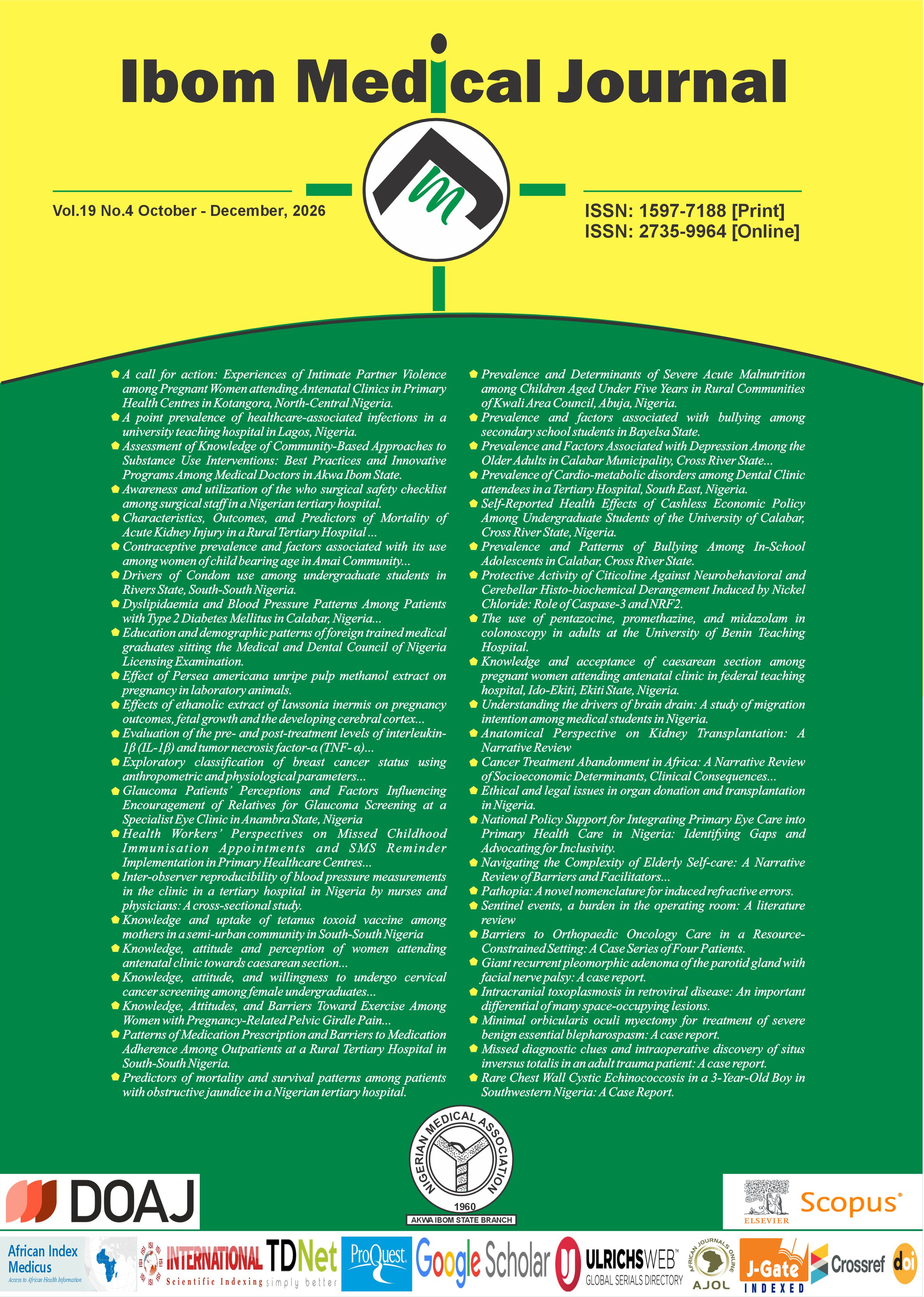
Ethical and legal issues in organ donation and transplantation in Nigeria
DOI:
https://doi.org/10.61386/imj.v19i4.1383Keywords:
Organ donation, organ transplantation, Nigeria, health law, informed consent, organ trafficking, Legal frameworkAbstract
Context: Organ donation and transplantation are life saving interventions for end stage organ failure. In Nigeria, increasing cases of kidney, liver, and cardiac diseases have intensified demand, yet legal uncertainty, ethical dilemmas, organ trafficking, commercialization, cultural hesitation, and weak regulation undermine public trust and equitable access.
Objective: The study critically examined the legal and ethical issues surrounding organ donation and transplantation in Nigeria, and recommended reforms that close the existing regulatory gaps.
Study Design, Setting, Materials and Methods: This study adopted a doctrinal and comparative legal research design. It analyzed Nigerian statutes, particularly the National Health Act, the Criminal Code, and the Trafficking in Persons (Prohibition) Enforcement and Administration Act 2015, alongside international instruments of the World Health Organization and the World Medical Association. Legislation and practice in the United Kingdom, India, Spain, South Africa and Iran were reviewed for comparison, supported by media reports, government guidelines and academic literature on organ trafficking and transplant inequity in Nigeria.
Results: Findings revealed that Nigeria has no standalone organ transplantation law. The National Health Act 2014 bans the sale of organs but does not create a donor registry, a licensing authority, brain-death criteria or an enforcement body. This gap has allowed inconsistent consent practices, inequitable access to the few functioning transplant centres, and a documented pattern of organ trafficking that preys on poor and vulnerable Nigerians. Generally Nigeria’s regulatory framework is legally fragmented and ethically inconsistent. New 2025 federal guidelines on transplant services are a step forward but remain administrative, not legislative, and are not yet enforced.
Conclusion: The article concluded by pointing out that Nigeria needs a comprehensive, rights-based Organ Donation and Transplantation Act that sets clear rules on informed consent, creates a donor registry and a licensing authority, and imposes real penalties for trafficking and commercial dealing in organs. Enacting and enforcing such a law is essential to protect donors and patients and to restore public trust in transplantation.
Downloads
Published
License
Copyright (c) 2026 Agi AU

This work is licensed under a Creative Commons Attribution 4.0 International License.